
WHAT IF INTELLIGENCE DOES NOT NEED
A BRAIN?

NO BRAIN.
NO NERVOUS SYSTEM.
NO CENTRAL CONTROL.
AND YET —
A SYSTEM EMERGES.
A world without a centre.
A system built through connection.
A PAINTING PROJECT BY BARBARA PUTO
MICROCOSM
Microcosm began with my fascination with organisms capable of creating complex networks without a brain or central control.
I became interested not in their appearance, but in the mechanisms behind their behaviour: connection, communication, adaptation and collective intelligence.
In my paintings, organic forms become a visual language for exploring a larger question: where does the individual end and the network begin?
I DON’T PAINT WHAT I SEE.
I PAINT HOW IT WORKS.
Detail from Scout - Microcosm series
WHEN DOES LIFE BEGIN?
In Microcosm, matter is never static. It emerges, connects, absorbs and transforms. Each painting explores a different moment in this process.
Birth is not about biological birth alone. It is about the moment when something has no final form yet — but already exists.
A dark organic form appears at the centre, surrounded by movement, light and delicate networks. The structure is only beginning to organise itself.
When does matter become a system? When does a connection become a relationship? And at what point can we begin to speak of intelligence?
Birth
2025
120 x 90 x 2.2 cm
Acrylic on canvas
IMPULSE
2026
110 × 170 × 2.2 cm
Acrylic on canvas
The process mirrors the idea behind Microcosm: structure emerges through interaction rather than from a predetermined plan.
A PAINTING AS A LIVING SYSTEM
Impulse did not begin with a predetermined final image.
I began with an imprimatura – a light blue broken with ultramarine, applied in broad gestures. From the beginning, movement was essential. It had to remain visible through successive layers and present at every level of the painting.
Using a broad brush, I introduced intense reds, oranges, ultramarine and greys. Large fields of colour emerged, crossed by sweeping curved lines. At this stage, I was not yet building specific forms – I was establishing directions, tensions and the energy of the composition. I also introduced yellow rays of light, cutting across the pictorial space and intensifying its movement.
Then dark matter appeared – emerging as if from a black hole, still formless, only beginning to awaken into life. The dark forms gradually occupied more of the composition, partially covering the earlier layers without erasing their movement.
Next, I introduced thin white threads of a network. They began to wrap around the dark matter, branching and connecting its fragments. The network feeds it. The matter begins to live.
At some of the connections, small points of intense colour appeared – like further signs of emerging life.
Impulse was built in layers. The movement initiated by the first gesture remained until the end, but with each successive layer its meaning changed: from energy and light, matter emerged; from the network, life.
The process mirrors the idea behind Microcosm: structure emerges through interaction rather than from a predetermined plan
Swipe through the stages of the painting →
WHAT HAPPENS WHEN THE OUTSIDE BECOMES PART OF US?
Absorption
2026
120 × 90 × 2.2 cm
Acrylic on canvas
No living organism exists in isolation. It takes in energy, responds to signals, processes information and changes through contact with its environment.
In Absorption, I was interested in what happens after the first impulse. The stimulus has already been received. The dark organic form draws from its surroundings, while delicate networks cross its boundaries. What comes from outside begins to enter its structure and transform it.
This process can be understood biologically, but for me it also became deeply human. We absorb people, experiences, relationships and information. They leave traces in us.
With time, the boundary between what was originally ours and what we have absorbed becomes increasingly difficult to define.
In the watercolours I explore what happens when separate forms begin to interact.
They approach one another, touch, exchange impulses and create connections. Gradually, what belonged to an individual form becomes part of a larger structure.
Watercolour allows me to make this process fluid. Pigment spreads, boundaries dissolve and colours penetrate one another. I can initiate the movement, but water also participates in what happens next.
For me, the network becomes a metaphor for a form of intelligence present in nature — one that emerges through connection, exchange and response rather than through central control. Individual elements do not exist in isolation; through their relationships, a larger and more complex structure can emerge.
This is the mechanism that fascinates me: connection does not merely link separate forms. It changes what becomes possible between them.
CONNECTED
Barbara Puto · 2025 · 50 × 70 cm, Watercolour on Fabriano 50% cotton paper, 300 gsm
COHERENCE
Barbara Puto · 2025 · 50 × 70 cm, Watercolour on Fabriano 50% cotton paper, 300 gsm
CLOSENESS
Barbara Puto · 2025 · 41 × 51 cm, Watercolour on Arches 100% cotton paper, 300 gsm
NATURE'S INTELLIGENCE
Barbara Puto · 2025 · 41 × 51 cm, Watercolour on Arches 100% cotton paper, 300 gsm
Paints: Schmincke Horadam professional watercolours
Moving sequence conceived and created by Barbara Puto from details of her original watercolours Nature's Intelligence and The Scout.
NATURE'S INTELLIGENCE
Barbara Puto · 2025 · 41 × 51 cm, Watercolour on Arches 100% cotton paper, 300 gsm
THE SCOUT
Barbara Puto · 2025 · 41 × 51 cm, Watercolour on Arches 100% cotton paper, 300 gsm
Paints: Schmincke Horadam professional watercolours
CONNECTION BECOMES STRUCTURE
FROM ORGANISM TO NETWORK
HOW MATTER EMERGES
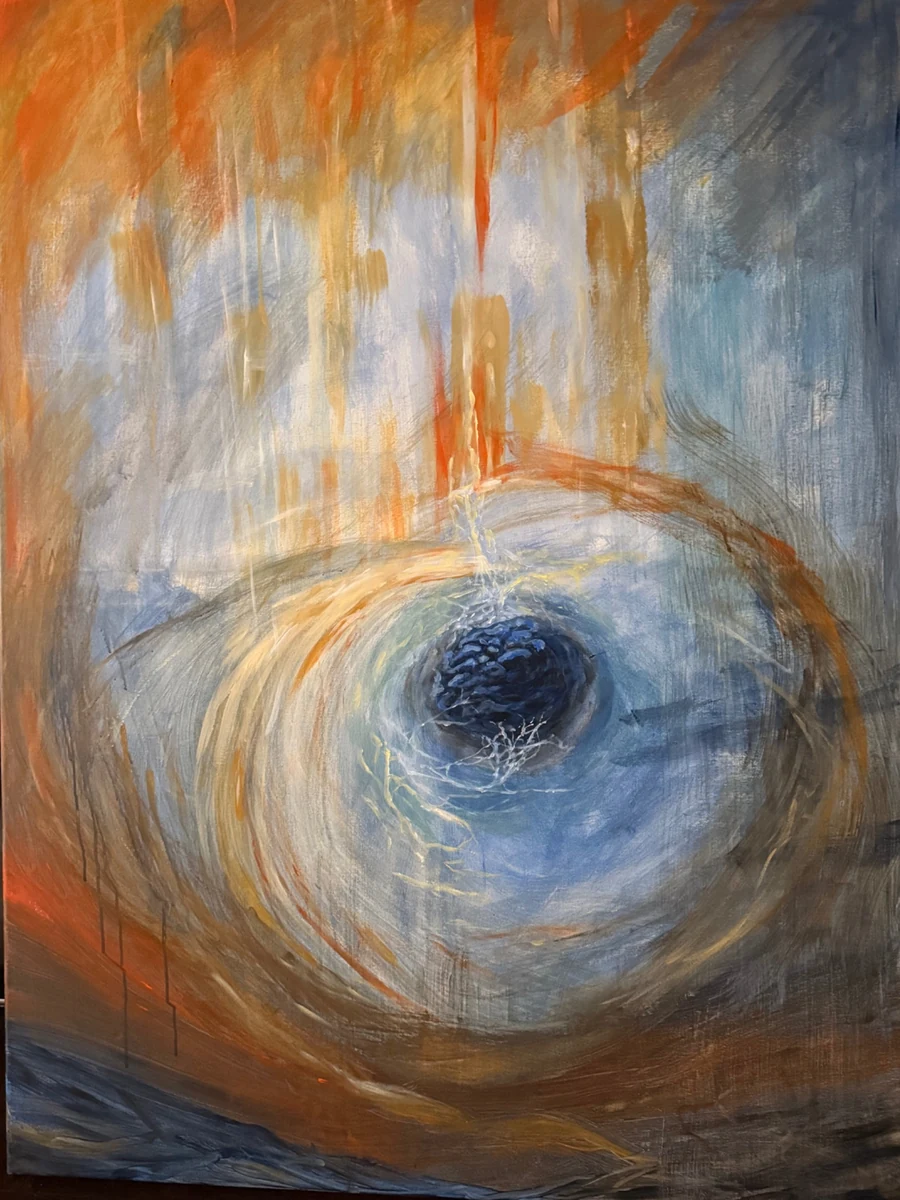
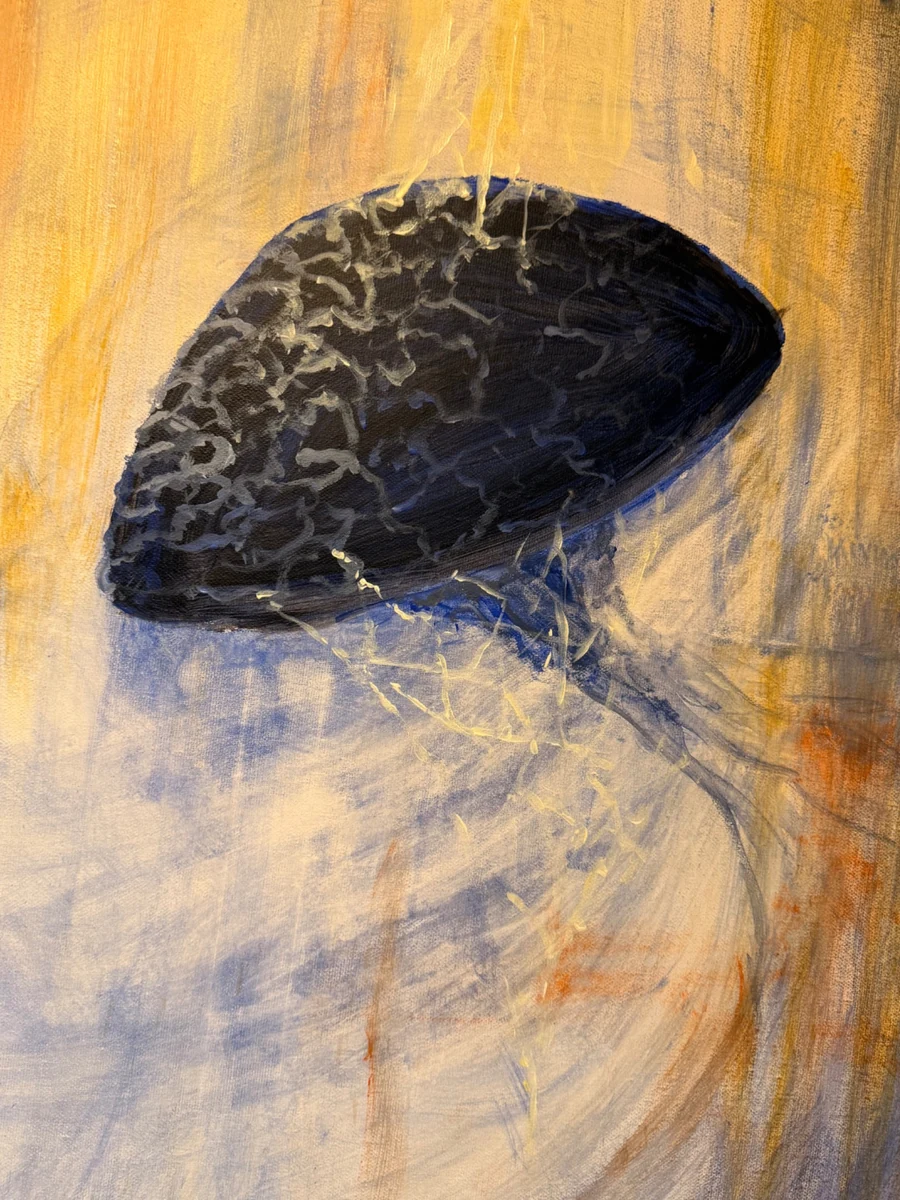
Both paintings began with movement rather than a finished image.
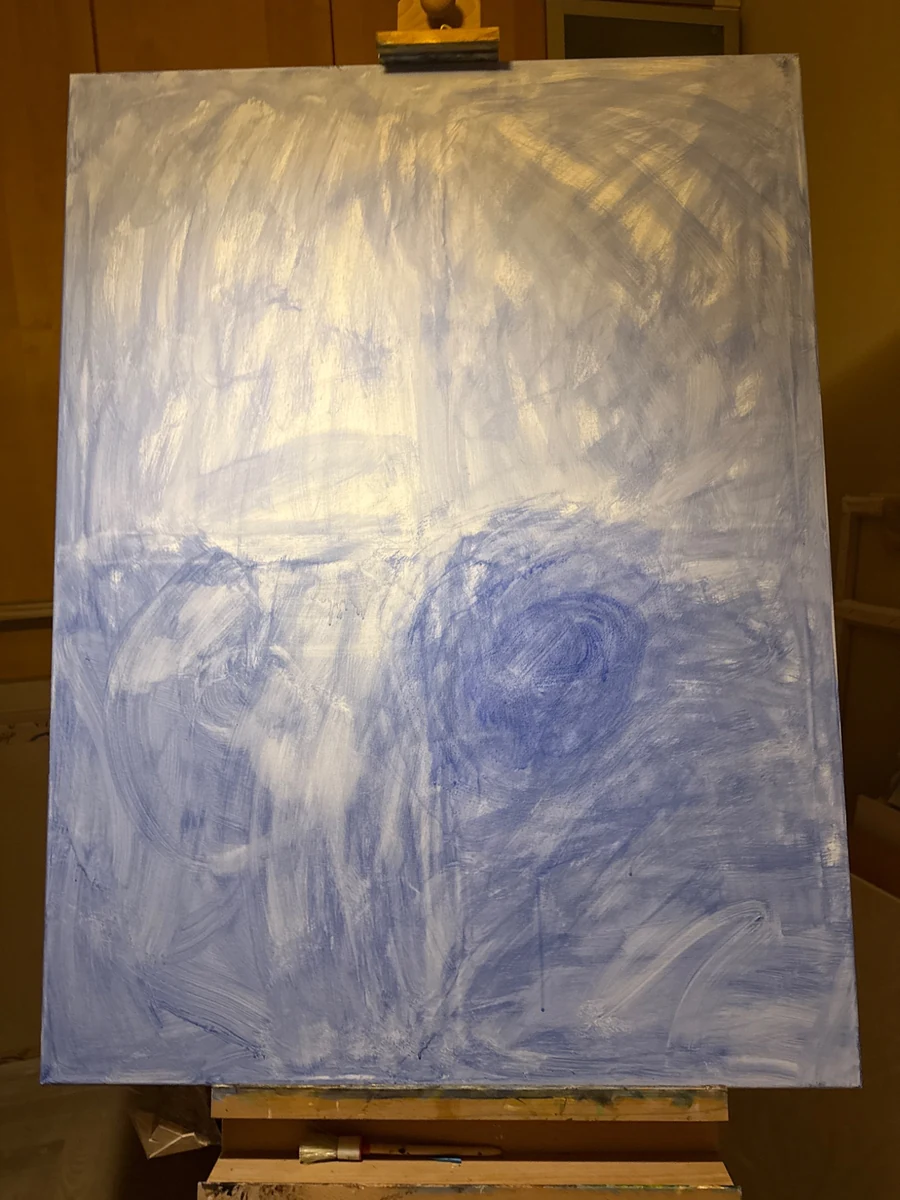
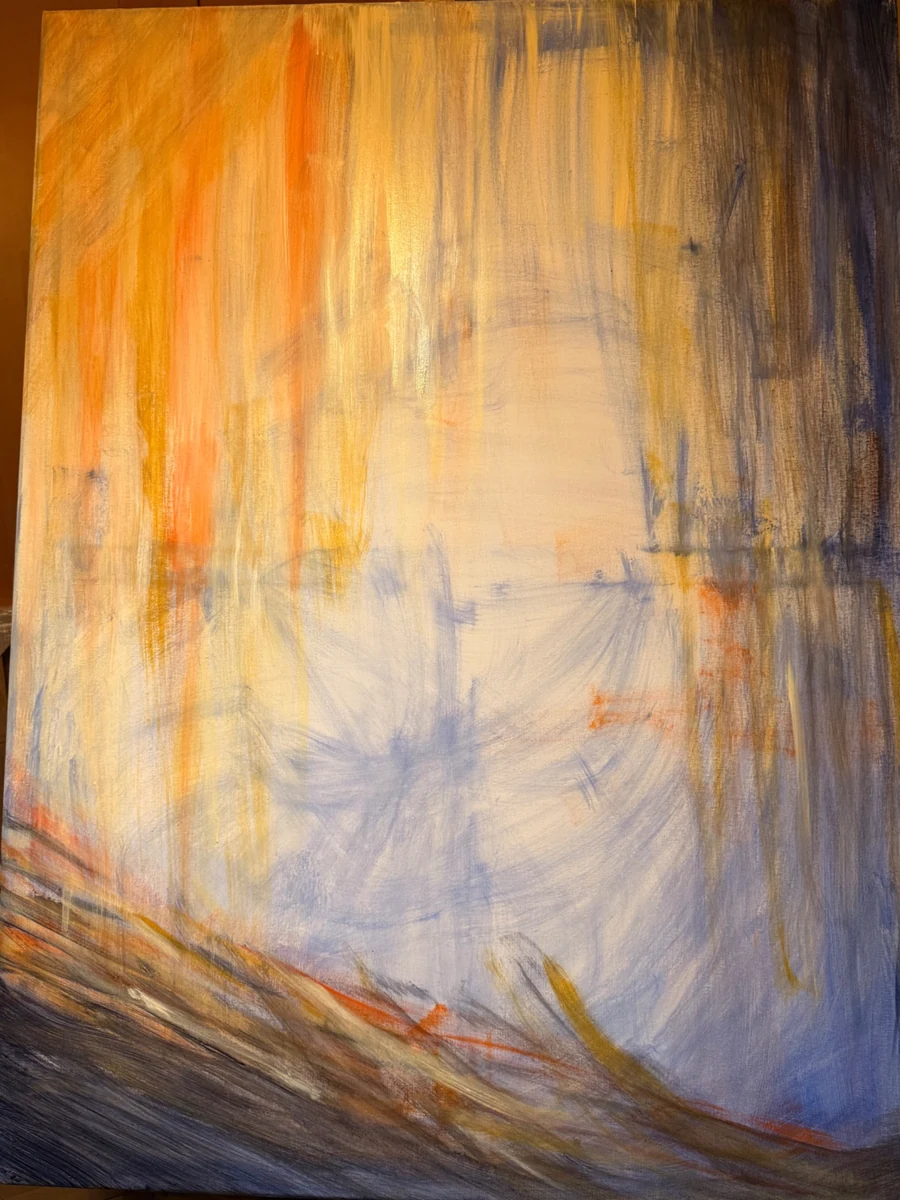
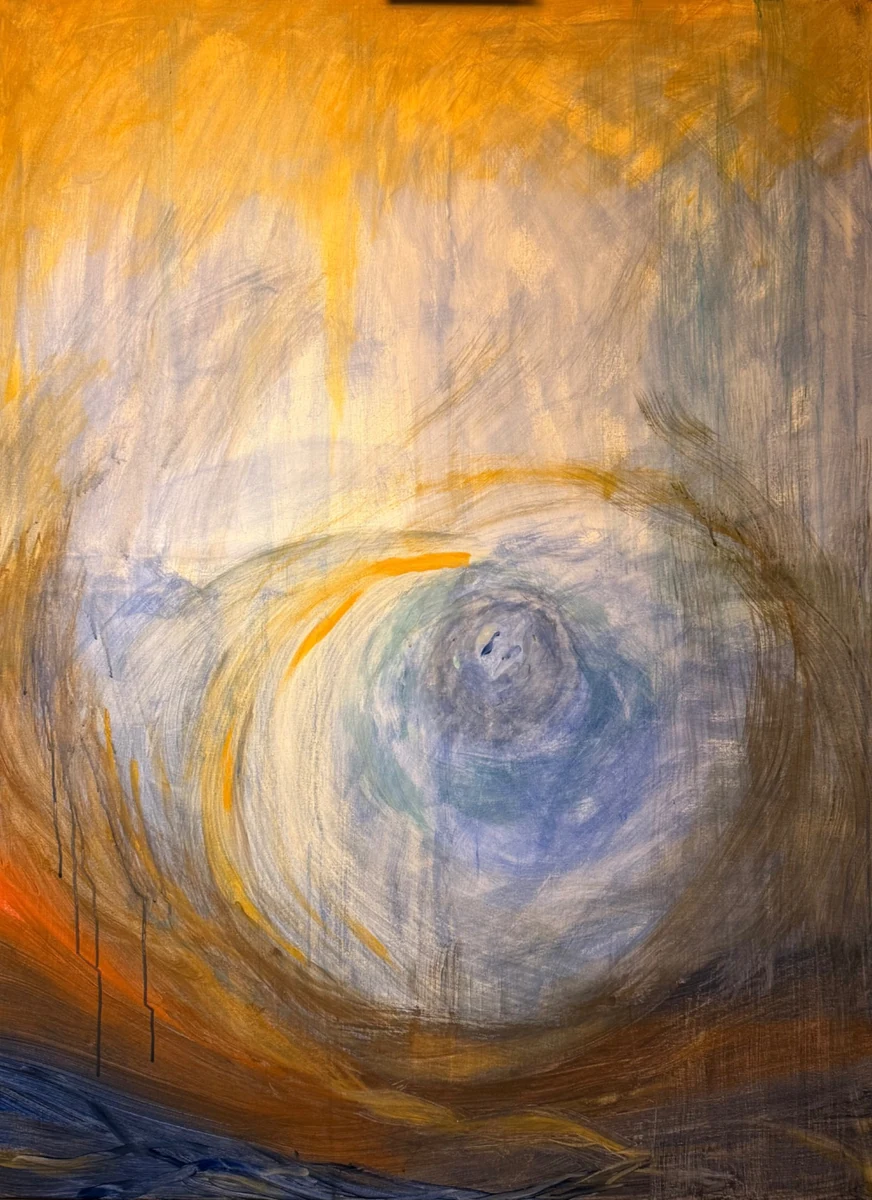
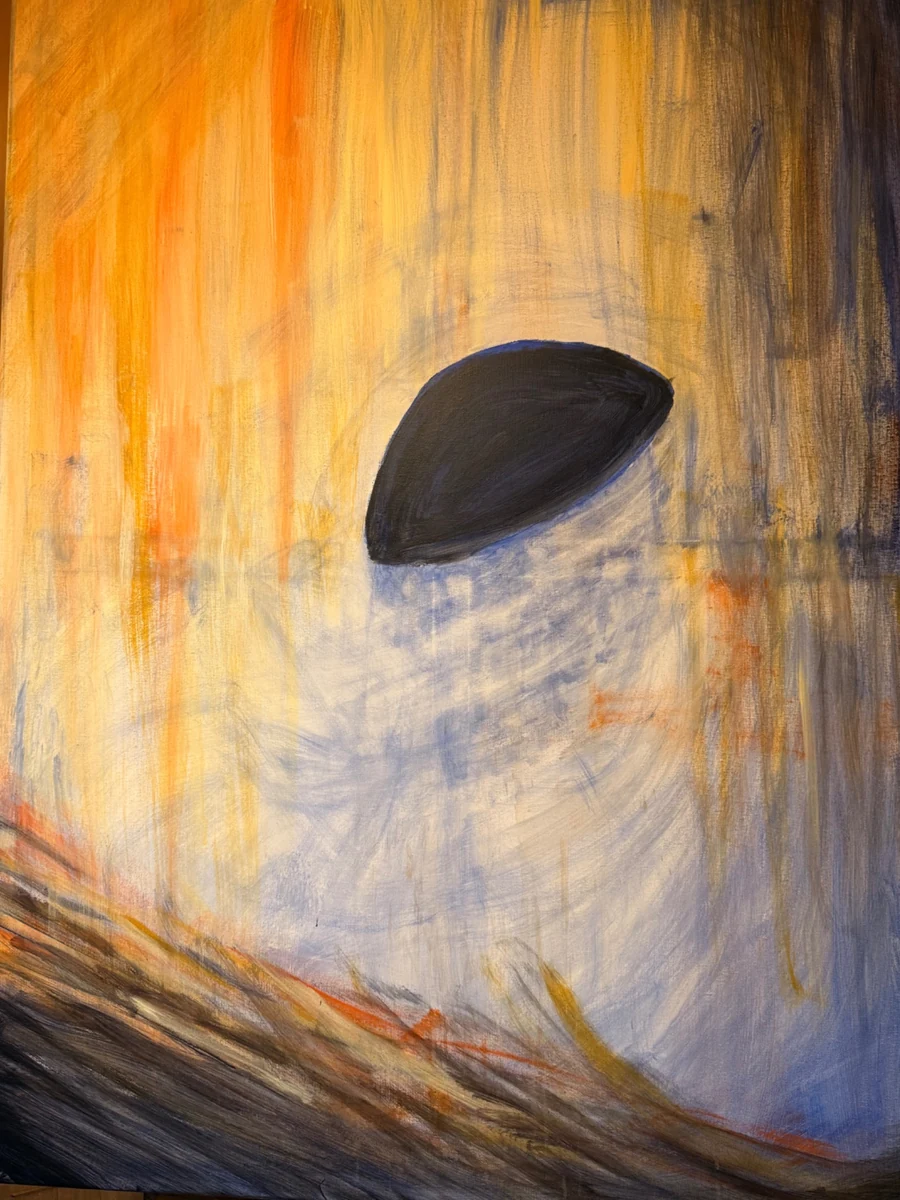
I built Birth and Absorption through successive layers, allowing earlier gestures and colours to remain visible beneath what came later. Broad brushstrokes established movement and direction. Gradually, dark organic forms emerged from the painted space. Fine networks appeared around them, connecting, penetrating and transforming the matter.
The photographs show moments when the paintings were still unresolved — when their final forms did not yet exist. For me, this gradual emergence is an essential part of Microcosm: matter takes form, begins to connect, and acquires the characteristics of a living system.
PROJECT CREDITS
Artistic Concept & All Artworks: Barbara Puto
Digital Exhibition Design & Curation: Barbara Puto
Website Design & No-Code Build: Barbara Puto
Video Editing: Barbara Puto — Instagram Editing Tools
Website Platform: WebWave
Tools: Traditional painting tools
Software: None used in the creation of the artworks.
Works from the Mikrokosmos series at the opening of the curated exhibition Connections, Ad-Hoc Gallery, Warsaw, 9 January 2026.
PROJECT STATEMENT — MICROCOSM
WHAT IF INTELLIGENCE DOES NOT NEED A BRAIN?
Microcosm is a long-term, evolving painting project born from my fascination with slime moulds (Myxomycetes), particularly Physarum polycephalum. These organisms are neither plants nor animals. In its plasmodial stage, Physarum polycephalum exists as a single, multinucleate cell capable of movement and, under favourable conditions, can spread across several square metres.
It has neither a brain nor a nervous system, yet it responds to its environment, navigates towards efficient routes between food sources, builds complex networks, and uses the traces it leaves behind as a form of external spatial memory. Research has also demonstrated its ability to anticipate regularly recurring events.
I am fascinated by this paradox: a single cell, without a brain or central control, can create complex, adaptive structures. Intelligence reveals itself through action.
It is the mechanism, rather than the appearance of slime moulds, that became the starting point for my work. I do not attempt to illustrate them. I observe how they respond, move, form connections, absorb and reorganise their structure, and then search for painterly equivalents of these processes.
In Microcosm, the subject of the painting becomes the mechanisms through which the organism operates — movement, response, absorption, connection and decentralised organisation. In this way, the project shifts the focus from biological representation to a painterly interpretation of the mechanisms of life.
The project develops through two interconnected approaches.
SYSTEM FORMATION — ACRYLICS
On large-scale canvases, material weight, layering and dynamic gesture come into play. Form emerges gradually. One movement changes the conditions for the next; matter organises itself, connections become networks, and structure begins to acquire the characteristics of a living system. The process of making the painting becomes part of the same mechanism that the painting explores.
SILENT INTELLIGENCE — WATERCOLOURS
Water and pigment allow me to work with flow, permeability and dissolving boundaries. I initiate the process, but I do not control it completely. Water becomes an active participant in the making of the image. Forms approach, connect and penetrate one another, while the network becomes a space for communication, information exchange and mutual interaction.
I DON'T PAINT WHAT I SEE. I PAINT HOW IT WORKS.
Microcosm is my way of investigating mechanisms hidden beneath visible form — processes through which living structures respond, communicate, adapt, connect and change.
Observing slime moulds also takes me beyond the micro-world. Their ability to survive, adapt and create effective structures without a central control system raises a question about our own ways of organising ourselves.
If intelligence can emerge without a command centre, might we also be overestimating the need for hierarchy?
ABOUT THE ARTIST
Barbara Puto is a Polish contemporary painter based in Warsaw, working in oil, acrylic and watercolour.
Her practice explores the mechanisms that shape living systems and human identity — emergence, adaptation, relationships, pressure and liberation. Rather than reproducing observed phenomena, she is interested in identifying the principles behind them and translating these into painting.
Her background in engineering and management informs a practice in which intuitive painting meets analytical observation. Her work has been presented in solo and group exhibitions and recognised in international art competitions and publications.
Official Artist Website
barbaraputo.art
barbaraputo.pl — full portfolio, artistic series, exhibitions, biography and current projects
Selected External Platforms
Saatchi Art — selected artworks presented on the platform
Barbara Puto, MBA — LinkedIn — professional background, Business Is Art articles and reflections on the relationship between art, creativity and management
Social Media